Bermudagrass
The most aggressive, most heat- and traffic-tolerant lawn grass grown in the American South, and the one that most reliably rewards a real maintenance program. It is also the least forgiving about shade and the hardest to keep contained. If you have full sun and you want a lawn that looks like a golf fairway, this is the grass. If you have oak trees, keep reading anyway — the answer is no, and it's better to hear it now.
What bermuda tolerates, and what it doesn't
Ratings are relative to other lawn grasses, not absolute. Bermuda's profile is unusually lopsided: near the top of the field on four measures and dead last on one that disqualifies it for a lot of yards.
Not all bermuda looks the same
Bermuda is one of the species where the named cultivar changes what you get — texture, colour, cold hardiness, and how low you can cut it all move. These are the ones you are most likely to be offered. Some species have effectively one option; bermuda has dozens, and the choice is worth making deliberately.
The cheap option, and the only bermuda you can grow from seed at scale. Coarser blade, lighter colour, and it will not hold a low cut the way the hybrids do.
The standard against which the others are measured, and still everywhere on southern athletic fields. Fine texture, dense, excellent wear tolerance.
Selected for drought performance and quicker spring green-up. The pick if summer water is your constraint or you want out of dormancy sooner.
Bred for cold hardiness, which makes it one of the few bermudas worth attempting at the northern edge of the range and into the transition zone.
Dark blue-green colour and the best shade tolerance of the common hybrids — which still means it needs a lot of sun, just less than Tifway.
What it actually looks like
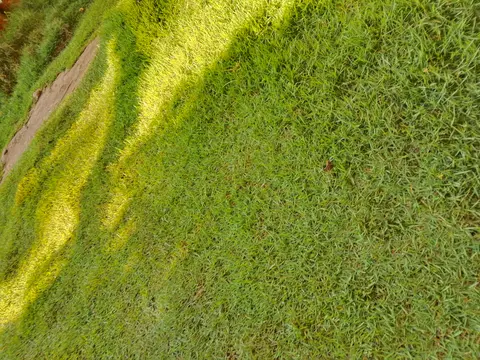
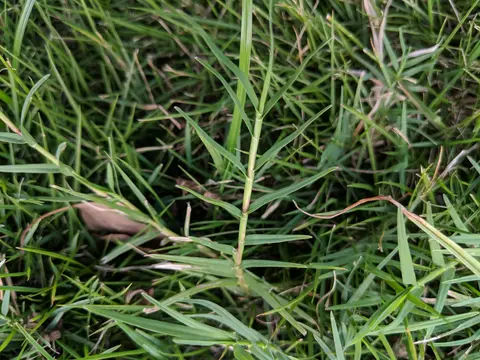
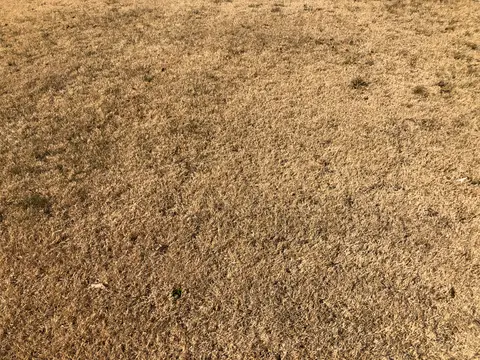
Species-level photographs of an established stand, the blade and canopy up close, and — where one exists — the off-season colour.
Four honest reasons to choose something else
Bermuda is oversold to people whose yards can't support it. Every one of these is a common, expensive mistake.
Mature trees, north-facing walls, or anything under about seven hours of direct sun. Bermuda will thin out and you will lose the area.
It goes fully tan after first frost and stays that way for months. That is normal, not damage — but it is not for everyone.
It spreads by stolons and rhizomes and does not respect edging. Containing bermuda is ongoing work, not a one-time job.
The most nitrogen, the most mowing, and the most attention of any grass here. Bermuda at its best is a commitment.
The grass that actually rewards a low cut
Bermuda spreads by both stolons above ground and rhizomes below, which is why it tolerates being cut shorter than any other common lawn grass and gets denser when you do it. Most home lawns land between 1 and 1.5 inches with a rotary mower. Below roughly an inch you are into reel mower territory, and the whole program tightens with it: mowing two or three times a week in peak growth, more attention to fertility, and usually a plant growth regulator to keep it manageable.
Common bermuda from seed is coarser and does not hold a low cut as well as the vegetative hybrids. If a fairway look is the goal, the cultivar decision matters as much as the mower — but pick a height you can maintain every week of July, not the one you can manage in May.
Follow the one-third rule and keep the blade sharp. If you let bermuda get away from you and then cut it back to height, you will scalp down to stem tissue and it will look brown for a week or two while it recovers — which it will, faster than any other grass here.
The hungriest lawn grass in common use
Bermuda carries the highest nitrogen appetite of any grass on this site: roughly 3 to 6 pounds of nitrogen per 1,000 square feet per season, applied in increments of a half to one pound spaced three to four weeks apart while it is actively growing. The low end of that range keeps a basic home lawn healthy. The high end is for irrigated, low-cut turf being pushed for appearance, and it comes with proportionally more mowing.
Timing matters more than the total. Nitrogen goes down after full spring green-up — not at the first warm week, when the plant is still living off stored carbohydrates — and stops four to six weeks before your average first frost. Late nitrogen is the single most reliable way to invite spring dead spot and lose winter hardiness at the same time.
The full seasonal schedule, including the soil-temperature triggers, lives in the warm-season calendar. Get a soil test before buying anything with phosphorus or potassium in it.
Plant it into the heat, not out of it
Bermuda establishes when it is growing hardest, so the window is late spring through early summer once soil temperatures are reliably warm. That gives the stand a full season to root before its first winter. Planting in late summer is the common mistake — immature bermuda going into cold weather is what winterkill happens to.
Only an option for common and seeded-type bermudas, not the vegetative hybrids. Cheapest by a wide margin, but coarser texture and it will not hold as low a cut. Seed into warm soil and keep the surface consistently moist until it fills in.
How the improved hybrids are planted. Far cheaper than sod for a large area, and it gives you the exact cultivar you want. Requires irrigation and patience while it runs together.
The fast, expensive answer, and the only realistic one on a slope or anywhere erosion is a concern. Buy from a farm that names the cultivar, and get it rooted before the first winter.
Whichever method you use, do not apply pre-emergent herbicide to an area you are about to plant. The barrier that stops crabgrass stops bermuda from rooting just as effectively. Work backward from your planting date and leave that window open.
Sun is non-negotiable; water is flexible
Shade is the disqualifier. Bermuda has the poorest shade tolerance of any grass covered here and needs something on the order of seven to eight hours of direct sun. In less, it thins, stops filling in, and eventually loses the area to weeds or moss — and no fertility program fixes it. Yards with mature trees are where bermuda lawns go to die, and the honest fix is a different grass in that area, not more inputs.
Water demand is about an inch to an inch and a quarter per week during active growth, delivered in one or two deep soakings rather than daily sprinkles. Bermuda's real advantage is what happens when you stop: it goes off-color and dormant under drought and comes back when water returns, better than anything else in the warm-season group. If you let it go dormant, commit — repeatedly half-watering a drought-stressed lawn is worse than leaving it alone.
Wear tolerance and recovery are its signature. Stolons and rhizomes mean it heals from damage faster than any alternative, which is exactly why it is the default for athletic fields across the South. If your lawn has dogs, kids, or a path worn across it, that recovery speed is worth more than any single other trait on this page.
What actually goes wrong
Bermuda is not a disease-prone grass, but the problems it does get are mostly preventative-only — by the time you see the symptom, the decision that caused it was months ago.
Dead circles that fail to green up in spring, from an infection the previous autumn. Worst on lawns pushed with late nitrogen. Fall preventative fungicide and cutting off nitrogen early are the main levers; recovery is slow because the pathogen kills roots and stolons.
Small tan spots the size of a coin, most common on lawns short on nitrogen. Often the fix is fertility rather than fungicide.
They can strip a lawn in a couple of days and outbreaks arrive with almost no warning. Scout in late summer, especially after a wet spell, and treat quickly — bermuda usually recovers fully because the crowns survive.
Not a disease. Young stands, shaded areas, and lawns fed late into fall are the most vulnerable. It shows up as areas that simply never green up.
Cultural practice does more than chemistry for nearly all of these: right height of cut, morning irrigation, no late-season nitrogen, and drainage in the low spots. Fungicide timing is covered in the warm-season calendar.
Brown for four months, and that's normal
Bermuda goes fully dormant after the first hard frost and stays tan until soil temperatures come back up in spring. Depending on how far south you are, that is anywhere from six weeks to five months of a brown lawn. This is not damage and there is nothing to fix. If a brown winter lawn is unacceptable to you, that is a legitimate reason to choose a cool-season grass instead — it is not a reason to overseed.
Winter overseeding with ryegrass buys you green in January and costs you in April: the ryegrass competes with bermuda exactly when it is trying to green up, and shades the soil at the worst possible moment. Golf courses accept that trade because they have to. For a home lawn, most extension programs advise against it.
Green-up begins as soil temperatures move through the mid-60s and takes several weeks to complete. Scalping down to remove dormant leaf tissue speeds soil warming and cleans up the stand, but wait until frost risk has passed — and hold your first nitrogen application until the lawn is fully green, not just waking up.
Bermuda vs. zoysia vs. St. Augustine
The three warm-season options most people are actually choosing between. The short version: bermuda for sun and traffic, zoysia for a compromise, St. Augustine for shade.
| Trait | Bermudagrass | Zoysiagrass | St. Augustine |
|---|---|---|---|
| Shade tolerance | Very poor | Moderate | Best of the three |
| Traffic and recovery | Excellent, fastest | Good, slow to heal | Fair |
| Nitrogen appetite | 3–6 lb N/M | 2–3 lb N/M | 2–4 lb N/M |
| Mowing height | 0.5–1.5 in | 0.5–2 in | 2.5–4 in |
| Mowing frequency | Highest | Moderate | Moderate |
| Texture | Fine (hybrids) | Fine to medium | Coarse |
| Main disease | Spring dead spot | Large patch | Grey leaf spot |
| Spreads into beds | Aggressively | Slowly | Moderately |
Keep reading
This page covers the grass. The guides cover the calendar — when to do each thing, and what triggers it.
Photography credits
- Dhraxze — CC BY-SA 4.0 (opens in a new tab) · Source (opens in a new tab)
- Sun Jiao (Interaccoonale) — CC BY 4.0 (opens in a new tab) · Source (opens in a new tab)
- Famartin — CC BY-SA 4.0 (opens in a new tab) · Source (opens in a new tab)
Sources
Every agronomic claim on this page traces to a named university extension or USDA publication. Regional programs sometimes disagree; where they do, we say so rather than averaging them.
Educational and regional in nature. Always follow the label on any product you apply — the label is the law, and it supersedes any general guidance here.
You know the grass. Now get the schedule.
Tell LawnDominator you have bermuda and it builds the program around it — nitrogen rate per zone, soil-temperature triggers, and the one thing to do this week. 14 days free, no credit card.