Bentgrass
This is the putting-green grass. Creeping bentgrass makes the smoothest, finest, lowest-cut turf that exists — the manicured green on a golf course is almost always bentgrass, mowed under a tenth of an inch. It can be genuinely, absurdly beautiful. It is also almost always the wrong choice for a home lawn, and you should hear that plainly before you go any further. Bentgrass only looks like the golf green when it is managed like one: reel-mowed several times a week, watered and hand-syringed through summer heat, spoon-fed nitrogen, and sprayed on a fungicide schedule because it is one of the most disease-prone turfgrasses in existence. Give it ordinary home-lawn care and it turns puffy, thatchy, scalped, and diseased within a season. If you are not running golf-course equipment and a spray program, keep reading — this almost certainly isn't the grass you want, and the honest answer is a resounding no for nearly everyone.
What bentgrass tolerates, and what it doesn't
Ratings are relative to other lawn grasses, not absolute — and bentgrass is not a lawn grass, so read them as a golf-green turf being asked to do a lawn's job. Its real profile is narrow: superb at one thing (an ultra-low, ultra-fine cut) and fragile at almost everything a homeowner needs, especially disease resistance and summer heat.
Green-grass cultivars, for the record
Here's the honest truth before the list: for a homeowner, the cultivar barely matters, because bentgrass is the wrong grass for almost every lawn. These are golf-turf varieties bred to be mowed under half an inch by professionals running spray programs and reel equipment. Choosing the 'best' one for a home lawn is optimizing a decision you shouldn't be making. That said, if you've inherited a bentgrass stand or you're set on it anyway, these are the names you'll actually encounter, and they do differ in one thing worth knowing — how much disease pressure they invite.
The classic. Released by Penn State in the 1950s and still one of the most widely planted bentgrasses on the planet — a seeded, three-clone synthetic, so a Penncross stand is genetically variable rather than uniform. That variability shows: more grain, occasional off-color or purplish patches, and it segregates over time. It's more forgiving of slightly higher cuts than the newer greens types, but 'more forgiving' is relative to grasses that tolerate no forgiveness at all.
The dense, upright, fine-textured generation bred at Penn State for the ultra-low cut of modern greens — A-4 and G-2 are the names you'll hear. They make a spectacular putting surface and are miserable as a lawn: the same density that makes them fast on a green piles up thatch and organic matter fast, demanding constant topdressing, verticutting, and the highest input of any grass here. These are the definition of a specialist tool used out of place.
The newer, improved generation. Both rate better than the older standards for dollar-spot resistance in NTEP trials — a real advantage given that dollar spot is bentgrass's defining, all-season disease. Better genetic resistance means fewer sprays, not none: on a home lawn without a fungicide program, even the improved cultivars get diseased. If you're going to grow bentgrass anyway, start here rather than with Penncross — but understand it's a smaller edge than the decision to skip bentgrass entirely.
A different species (Agrostis capillaris), not creeping bentgrass, and the closest thing to a 'lawn' bentgrass. It creeps far less, builds less thatch, tolerates a somewhat higher cut, and takes lower inputs — which is why it turns up in cool, humid lawns in the Northeast and Pacific Northwest, sometimes as a minor seed-mix component. It's still fine-textured, still disease-prone, and still not what most people should plant, but it's the least demanding member of the family and the only one that's arguably lawn-adjacent.
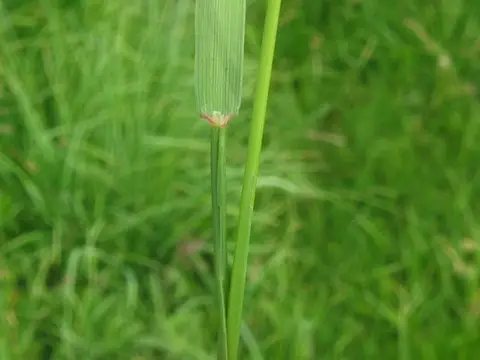
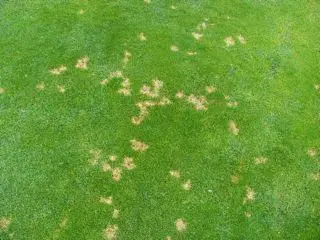
What it actually looks like
Species-level photographs of an established stand, the blade and canopy up close, and — where one exists — the off-season colour.

Four honest reasons — and for most people it's all four
Be clear-eyed: bentgrass is a specialty turf for golf greens, tees, and bowling greens, and extension programs across the country flatly advise against it for home lawns. If any one of these is true, choose something else. For almost every homeowner, every one of them is true.
Bentgrass only looks right cut under half an inch with a reel mower, several times a week. A standard rotary at 2–3 inches turns it into a puffy, scalped, uneven mat within a season. If you're not running greens equipment, this isn't your grass.
This is one of the most disease-prone turfgrasses there is — dollar spot, brown patch, Pythium blight, anthracnose. Golf courses keep it alive with preventative spray programs. Without one, a humid week in July can wipe it out.
Bentgrass is the opposite of low-input: constant mowing, frequent water and syringing, spoon-fed fertility, topdressing to fight thatch, and fungicide. It is the highest-maintenance turf a homeowner could pick.
It wants full sun and cool air. Shade and summer heat/humidity are exactly the conditions that trigger its diseases and melt it out. Outside the cool, sunny, well-drained sites it's bred for, it struggles badly.
Reel-mowed under half an inch — or don't bother
Everything about bentgrass starts at the mower, and the mower has to be a reel. It's built to be cut extremely low — a tenth to a half inch, the range that produces the smooth, dense, fast surface of a putting green. That's the entire point of the grass, and it's the one thing it does better than anything else on earth.
The catch is that low cut is not optional. Cut bentgrass above about half an inch and its aggressive stolons pile up into a spongy, puffy surface that a rotary mower then scalps in the high spots, leaving brown gouges. There is no casual middle setting. To hold it at green height you're reel-mowing several times a week — daily in peak growth on an actual green — and often rolling and grooming between cuts.
This is why the honest recommendation for nearly every homeowner is not a mowing tip but a warning: if you don't own reel equipment and can't mow this often, you cannot maintain bentgrass, and no fertilizer or watering program makes up for it. The full season, keyed to soil temperature, lives in the cool-season calendar.
Spoon-fed, not dumped
Bentgrass is fed little and often — 'spoon-fed' is the term of art. Instead of a few heavy applications, greens managers put down frequent, light doses of nitrogen, sometimes as foliar sprays, to keep color and density without pushing the soft, lush growth that invites disease and builds thatch. On a well-run green, that can be as little as 1 to 2 pounds of nitrogen per 1,000 square feet a year; pushed harder at higher cuts, lawn-type culture can run several times that. The number matters less than the method: small amounts, spread out.
Overfeeding is a real mistake here, not a minor one. Excess nitrogen produces succulent tissue that dollar spot, brown patch, and Pythium feed on, and it accelerates the thatch and puffiness that already plague low-cut bentgrass. Underfeeding is its own trap — nitrogen-starved bentgrass is more prone to dollar spot and anthracnose. The window between too much and too little is narrow, which is exactly why it gets spoon-fed.
Get a soil test before adding phosphorus or potassium, and keep an eye on soil pH — low pH invites take-all patch. The full seasonal schedule with soil-temperature triggers is in the cool-season calendar.
Seed is slow; the real work starts after it's up
Like other cool-season grasses, bentgrass establishes best from a late-summer to early-fall seeding, when soil is still warm but the disease-heavy heat of summer is passing and the seedlings can root through fall. Spring is a distant second — you're racing to get a stand mature before summer stress hits. Bentgrass is slow to establish from seed, and the seed is tiny, so a firm, precisely graded, weed-free seedbed matters more than with any coarse lawn grass.
But establishment is not the hard part with bentgrass — maintenance is. Getting it up is straightforward; keeping it as anything better than a puffy, diseased patch is what defeats homeowners. Go in understanding that the seedbox is the easy day.
The usual route. Tiny seed at a light rate into a firm, level, weed-free bed, ideally late summer to early fall. Cheap to buy, slow to fill, and demanding to grow in — you're mowing low and watching for disease almost from the start.
Greens are sometimes established vegetatively from stolons to lock in a single named cultivar's uniformity. It's a golf-course practice, not a homeowner one — specialized material, planting, and topdressing.
Greens-grade bentgrass sod exists but is a specialty product grown on a compatible sand rootzone. Instant cover, high cost, and it still needs full greens management the day it's laid — the sod doesn't change what the grass demands.
Don't apply pre-emergent herbicide to an area you're about to seed — the barrier that stops crabgrass stops bentgrass from rooting too. And plan for topdressing from the beginning: bentgrass builds thatch fast, and light, frequent sand topdressing is part of establishing a smooth, firm surface, not an afterthought.
Cool, sunny, well-drained — and even then it's a project
Bentgrass is adapted to cool, humid regions — roughly the northern tier and cooler transition-zone sites, where summers aren't brutally hot. It tolerates cold and even somewhat wet, acidic soils better than most cool-season grasses, and it's grown well into short-season northern climates. That cold hardiness is real. Its weakness is the other end of the calendar: summer.
Sun and airflow are non-negotiable. Bentgrass wants full sun and open air movement so the canopy dries quickly; shade and stagnant, humid pockets keep it wet, weaken it, and turn every one of its diseases loose. A green tucked against trees is a maintenance nightmare for exactly this reason, and a shaded home lawn is worse.
Water demand is high and unusual. Because it's cut so low, bentgrass roots shallowly and can't ride out dry spells the way a taller lawn grass does, so it needs frequent irrigation — and in summer heat, a light midday 'syringe' to cool the canopy and prevent wilt. That's a level of hands-on watering no ordinary lawn requires, and skipping it during a hot, humid stretch is how bentgrass dies.
The defining reality: it is a disease magnet
If you take one thing from this page, take this: creeping bentgrass is among the most disease-prone turfgrasses there is, and the low cut and summer humidity that come with it make the problem worse. Golf courses don't so much cure bentgrass diseases as prevent them, spraying fungicide on a calendar because by the time symptoms show, curative sprays are often too late. For a homeowner, that spray program — not the mower — is the real dealbreaker.
The signature bentgrass disease. Small, silver-dollar-sized bleached spots that merge into larger blighted areas, favored by warm days, heavy dew, and low nitrogen. It appears on more days of the year than any other bentgrass disease and is a primary reason greens get sprayed all season.
Rhizoctonia. Roughly circular patches, sometimes with a darker smoke-ring edge, that erupt during hot, humid summer weather — especially when nights stay warm and the canopy stays wet. High nitrogen and poor airflow make it worse.
The most destructive. In hot, humid weather Pythium can move through low-cut bentgrass in a matter of hours, leaving greasy, matted, water-soaked streaks that follow drainage and mower paths. It can destroy large areas overnight, which is why prevention is the only real defense.
Colletotrichum. Irregular yellow-to-bronze patches driven by summer stress — low mowing, low fertility, heat, and compaction all predispose it. Nitrogen fertility is the single biggest cultural lever, one more reason the spoon-feeding has to be right.
Gray and pink snow molds attack matted turf under snow cover in cold regions, while take-all patch shows up as sunken rings on high-pH sand rootzones. Both add to the year-round disease load bentgrass carries.
Cultural practice buys you a lot before chemistry does: full sun and airflow, morning watering so the canopy dries, restrained nitrogen, thatch management by topdressing, and never letting it sit wet overnight. But make no mistake — kept at lawn conditions without a fungicide plan, bentgrass will get diseased. Timing is in the cool-season calendar.
The brown season is July, not January
For a cool-season grass, the dangerous season is summer, and for bentgrass it's the whole ballgame. Peak growth happens in the cool of spring and fall at soil temperatures around 60–75 °F. When summer heat and humidity arrive, growth slows, roots shorten under the low cut, and the plant becomes vulnerable — this is precisely when dollar spot, brown patch, Pythium, and anthracnose do their damage. Unlike a warm-season grass that browns on a predictable schedule and recovers on its own, bentgrass under summer stress is a plant fighting to stay alive, and it needs help doing it: syringing, careful watering, restrained feeding, and disease prevention.
In winter, bentgrass largely stays green to off-color in the cool, humid climates where it's grown, semi-dormant rather than fully brown, though hard cold can tinge it straw-colored and snow cover brings its own molds. That's normal winter behavior, not the crisis. The crisis is a hot, humid week in July, and the difference between a beautiful bentgrass surface and a dead one is what you do during it.
So the mental model is inverted from a warm-season lawn: don't relax in summer and wait out a dormancy. Summer is when bentgrass demands the most attention and is least forgiving. If a hands-on July isn't in your plans, that alone is reason enough to plant something else — a message you'll find repeated all over this page, because it's the truth about this grass.
Bentgrass vs. perennial ryegrass vs. Kentucky bluegrass
Bentgrass is in a different category from the grasses people actually build cool-season lawns from — it's a golf-green turf, and the comparison is here to show you why. For a real home lawn, perennial ryegrass gives you fast, tough turf and Kentucky bluegrass gives you a self-repairing classic, both at heights and inputs a homeowner can actually deliver.
| Trait | Bentgrass | Perennial ryegrass | Kentucky bluegrass |
|---|---|---|---|
| Shade tolerance | Poor | Fair | Fair |
| Traffic and recovery | Recovers, needs intense care | Excellent wear | Good, self-repairs |
| Nitrogen appetite | Spoon-fed, frequent | 2–4 lb N/M | 2–4 lb N/M |
| Mowing height | Under 0.5 in | 1.5–2.5 in | 2–3.5 in |
| Mowing frequency | Very high | Moderate–high | Moderate |
| Texture | Very fine | Fine to medium | Fine to medium |
| Establishment speed | Seed slow / specialty sod | Seed, fastest | Seed, slow |
| Main disease | Dollar spot / Pythium | Gray leaf spot / red thread | Summer patch / dollar spot |
| Spreads into beds | Creeping stolons | Bunch-type (no spread) | Spreads by rhizomes |
Keep reading
This page covers the grass. The guides cover the calendar — when to do each thing, and what triggers it.
Photography credits
- Free Photos (Pixabay) — CC0 1.0 (Public Domain Dedication) (opens in a new tab) · Source (opens in a new tab)
- Kristian Peters (User:Fabelfroh) — CC BY-SA 3.0 (opens in a new tab) · Source (opens in a new tab)
- Glenobear (Wikimedia Commons) — Public Domain (PD-self, released by author) (opens in a new tab) · Source (opens in a new tab)
Sources
Every agronomic claim on this page traces to a named university extension or USDA publication. Regional programs sometimes disagree; where they do, we say so rather than averaging them.
Educational and regional in nature. Always follow the label on any product you apply — the label is the law, and it supersedes any general guidance here.
You know the grass. Now get the schedule.
Tell LawnDominator you have bentgrass and it builds the program around it — the spoon-fed nitrogen cadence, the summer disease-prevention windows for dollar spot, brown patch, and Pythium, soil-temperature triggers, and the one thing to do this week. 14 days free, no credit card.